
A large-scale restoration project designed to turn degraded land into a productive, resilient and investable landscape.
Ile Dotun is a 108,000-hectare territorial restoration project in Ogun State, Nigeria. Designed at landscape scale, it brings together ecological restoration, community livelihoods and long-term value creation within a coherent implementation framework.

Landscape-scale restoration
Ecological recovery, productive land use and territorial coherence

Community-rooted design
A model designed to connect land restoration with local livelihoods

Structured for implementation
Governance, land control and long-term project architecture
A project born from a territorial reality
In many degraded rural areas, land follows a familiar downward cycle. Productivity falls. Pressure on natural resources increases. Communities lose stability. Economic opportunity thins out. Land is exhausted, then abandoned.
Ile Dotun was designed as a response to that cycle. Its ambition is not simply to plant trees, nor to isolate conservation from production. It is to restore the underlying logic of the territory itself: protect what must be preserved, regenerate what has been degraded, and rebuild an economic base that allows communities to remain, produce and prosper over time.
This is what makes the project distinctive. It stands at the intersection of climate action, biodiversity restoration, food security and rural development.
Beyond restoration, a territorial platform
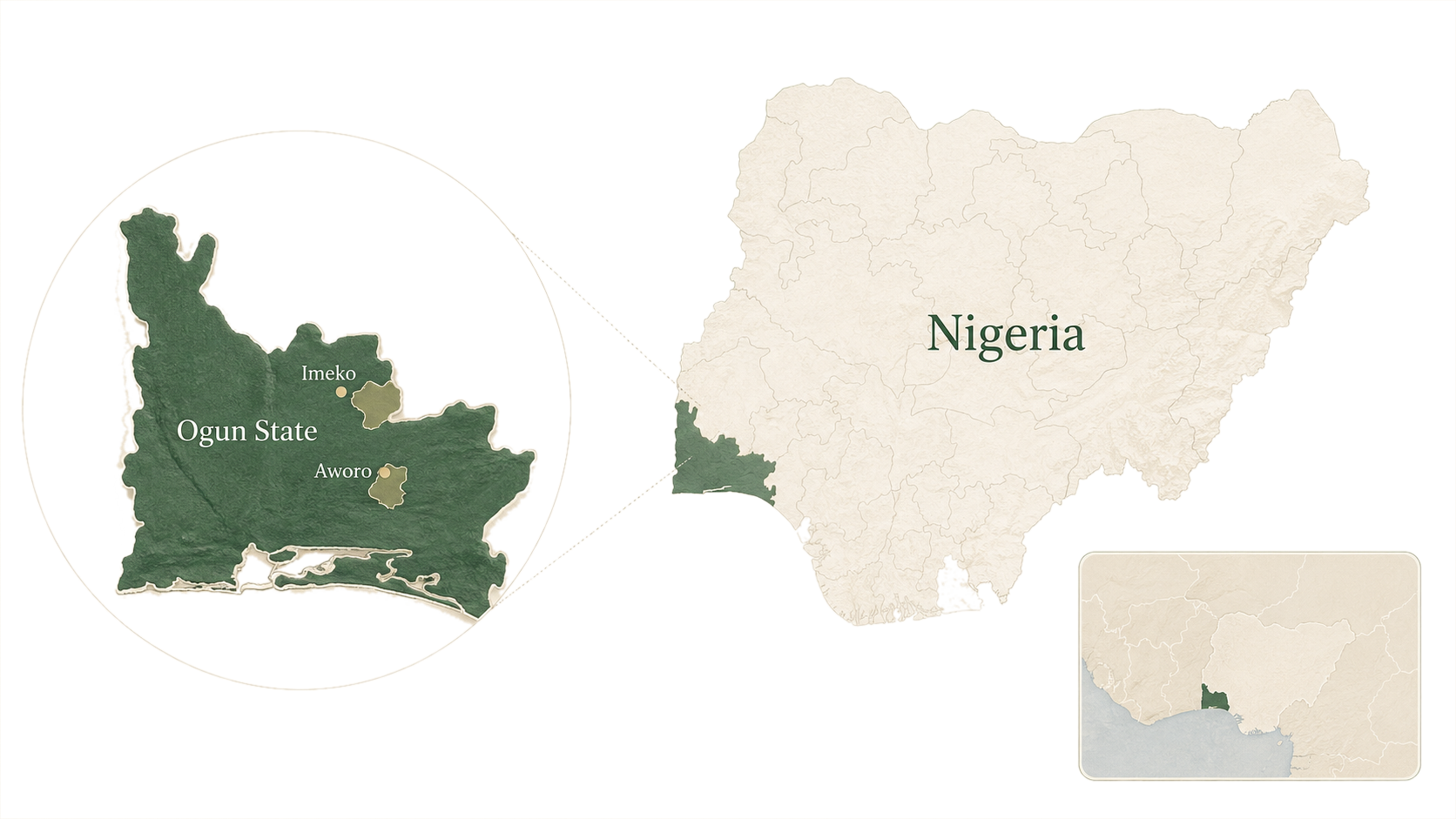
Ile Dotun matters because of its scale, but also because of the discipline behind its design. The project covers 108,000 hectares across the Imeko and Aworo forest reserves in Ogun State. That scale changes the nature of the intervention. It allows restoration to be approached as landscape engineering rather than fragmented action. It makes it possible to think infrastructure, productive activity, ecological recovery and local livelihoods together.
The project was also positioned within a substantial institutional environment. It was supported by the Nigerian Federal Ministry of Environment and the Nigerian Sovereign Investment Authority on the public side, and by InVivo and other companies on the private side. The project was officially presented in Abuja in July 2018 during President Emmanuel Macron’s visit to Nigeria.
What emerges is not a narrow reforestation scheme, but the outline of a large-scale restoration platform — one that was designed to align ecological ambition, public legitimacy, productive land use and long-term implementation logic.




A land-use model built on balance
At the heart of Ile Dotun is a simple but powerful principle: restoration only works at scale when ecological integrity, community use and economic productivity are designed together.
The project’s Land Use Plan was structured around three complementary components.
What makes this model compelling is that it avoids the false choice between conservation and development. It does not treat productive land as the enemy of restoration, nor conservation as a constraint on growth. Instead, it organises the territory so that environmental recovery, community participation and commercial activity reinforce one another.
Natural conservation zone
Agronomic rationale
(≈33%)
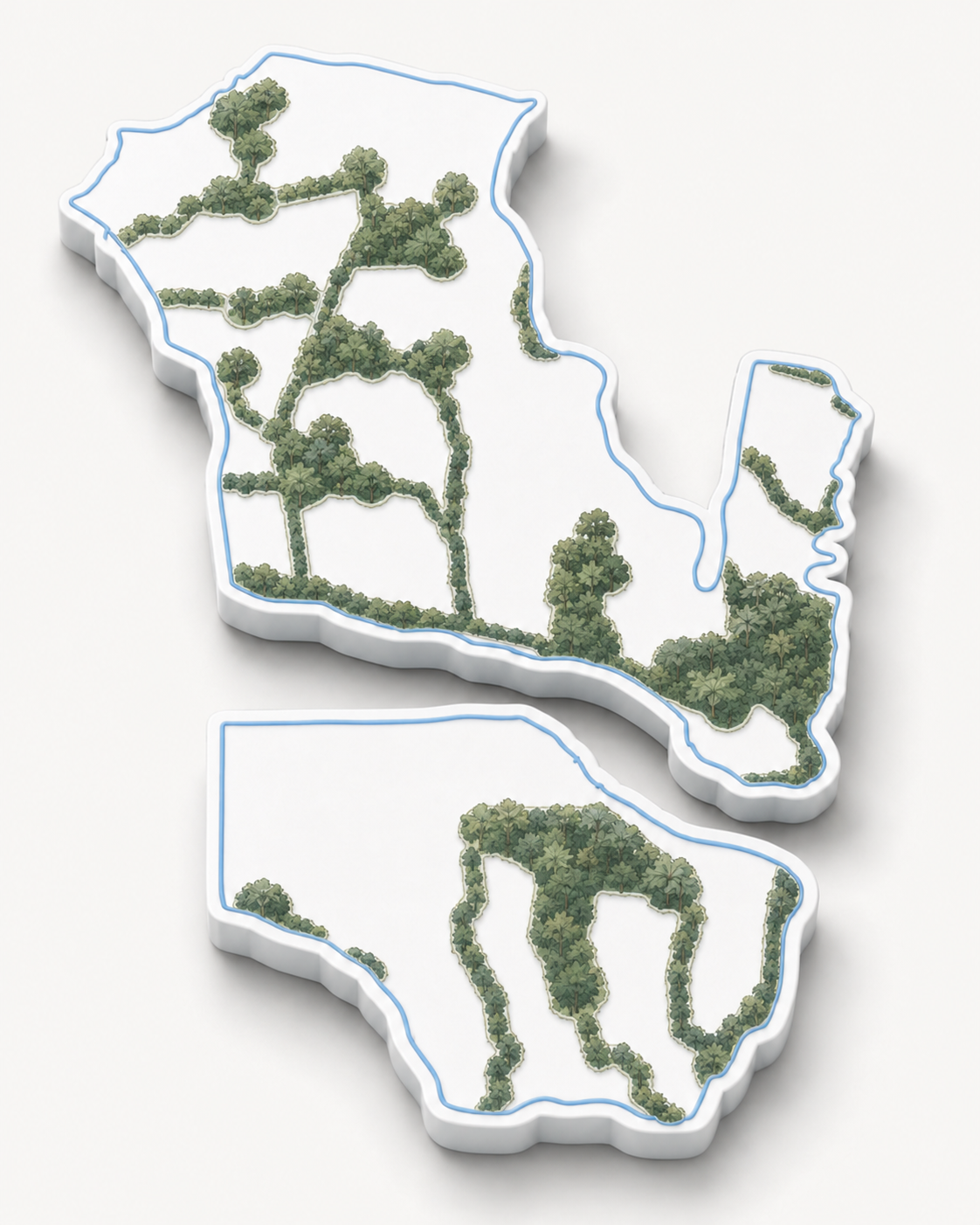
This is the ecological backbone of the project — the part that protects biodiversity, restores natural functions and strengthens long-term resilience.
Community based farming zone
Social rationale
(≈33%)
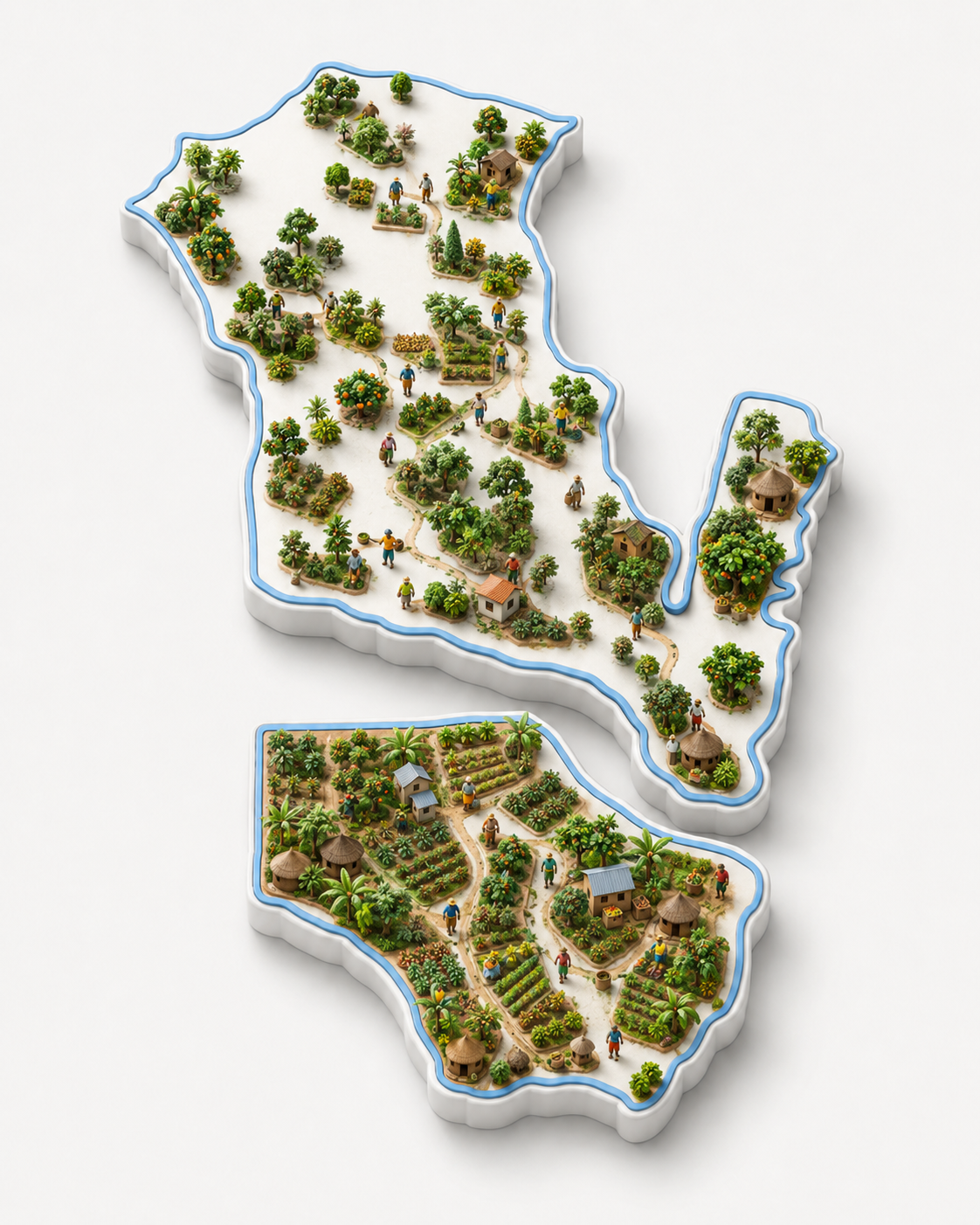
This is intended for community farming and smallholders, where restoration is linked directly to local livelihoods and more stable agricultural production.
Commercial agroforestry zone
Economic rationale
(≈33%)

This is designed for commercial tropical crops in an agro-industrial model, including cocoa, rubber, palm oil and cashew, providing the economic depth needed to support long-term viability.
What the project is designed to unlock
The ambition of Ile Dotun is best understood through the scale of its intended outcomes.
These figures should be read for what they are: the intended outcomes of a structured project design, not impacts already delivered. That distinction matters. Ile Dotun is credible precisely because the ambitions were framed at a level detailed enough to become intelligible, measurable and financeable, while still requiring the investment needed for full deployment.
108,000
hectares
of degraded landscape targeted for restoration
200
million trees
planned over 5 years
90,000
permanent jobs
targeted
37.5
million tons CO2
over 20 years
3,500
family farms
structured in tree based agriculture
A scalable platform, fully funded to deliver lasting impact
Ile Dotun is backed by a comprehensive US$500 million investment fund, dedicated to the full implementation of its land use plan across all three components of the project.
This capital covers the entire lifecycle of the initiative – from land preparation to long-term management – ensuring sustainable impact at scale.
Projected capital expenditure
US$500M
dedicated to full implementation

farmer loans & greenhouses
Financing for farmers to adopt protected cultivation and improve productivity.

Land restoration & tree planting
Rehabilitating degraded landscapes and establishing trees for long-term resilience.

Commercial agroforestry plantations
Long-term productive systems that generated yields and strengthen land-use value.

Access, energy & social infrastructure
Building the physical and social foundations that enable communities and economic activity.

Natural ecosystem restoration
Protecting and restoring biodiversity, watersheds and critical ecological functions.

Operational infrastructure, monitoring & certification
Satellite imagery, carbon measurement, traceability and certification infrastructure.
A governance structure built for scale, accountability and long-term impact
A multi-entity governance model was established to ensure clarity of roles, alignment of responsibilities and separation between land ownership, operations, monitoring and long-term asset management.
This structure enables the project to operate with transparency, institutional oversight and technical rigor—while maintaining the flexibility needed for a long-term transformation program of this scale.

Land control & long-term security
IDDC Assets, controlled by Ogun State, manages the 50-year land lease, ensuring legal clarity and long-term stability for the project

Governance & professionalism
IDDC Operations oversees governance, compliance and operational standards to ensure transparency, accountability, and performance

Specialised operations through SPVs
Special Purpose Vehicles (SPVs) provide market-specific expertise, from agriculture and carbon to infrastructure and certification.

Long-term monitoring & value creation
A governance architecture designed for durability, supporting monitoring, reporting and future environmental asset structuring.

For LDN Advisory, this is also where the value proposition becomes especially concrete: not simply identifying an opportunity, but translating it into a coherent framework that connects land-use design, governance, implementation logic, monitoring, infrastructure and future certification pathways.
Where the project stands today
Ile Dotun is already strong in the quality of its design. Its territorial rationale is clear. Its land-use model is coherent. Its governance framework has been articulated. Its intended impacts were defined at a meaningful scale.
What it has not yet done is move into full deployment and certification. That next phase depends on the mobilisation of the right investment partners and the financial structure required to activate implementation at the level originally envisioned.
This should not be read as a weakness. On the contrary, it shows that the project was shaped with enough discipline to distinguish clearly between design, structuring and execution. The foundations are in place. The next step is to convert a well-structured project architecture into implementation on the ground.

Design
Completed
Structuring
Completed

Next phase
Investment
mobilisation
& deployment
Execution
Upcoming
The foundations are in place.
A project designed for scale, credibility and long-term value
Ile Dotun illustrates what large-scale land restoration can become when ecological ambition is matched by territorial thinking, governance discipline and implementation logic. It is the kind of project that can help define a new generation of restoration platforms in Africa: grounded in place, structured for execution and designed to create enduring value.